GREY GALAXIE / INDEPENDENT ASTROPOLITICAL REPORTING

The Desk · Daily Atlas · The Atelier · Astrology Now · 68 races · Archive
The Midday Midterm Reckoning
FROM THE CHAOS DESK · NOVEMBER 3, 2026 · MIDDAY EDITION
Reporting through 12:55 PM Pacific Standard Time. Early participation totals and operational reports are not certified election results. No winners are called here.
Good afternoon, Agents of Chaos!
Donald Trump surveyed the usual Election Eve rituals…the frantic speeches, the pollster séances, the everything-is-fine charade…and decided it was all a little too bland for his taste. So while Americans were busy prepping for the midterms that could decide whether his administration keeps its congressional leash, American forces dropped bombs on an Iranian island. Because apparently, nothing says democracy like a side of international crisis.
Yes, a real island. In Iran. The night before Americans decide if Republicans get to keep their congressional toy chest.
And somehow, that’s just the overture in today’s political theater of the absurd…if you’re still reaching for popcorn, you might want something stronger.
Meanwhile, the Supreme Court told Trump’s Justice Department to go find another playground for their last-minute California ballot stunt. Federal election monitors are dropping into all 50 states like it’s a democracy fire drill. More than 59 million early ballots had been recorded by Tuesday morning…and Michigan is staging a political farce for the history books, with a Democratic congresswoman endorsing a Republican Senate candidate and accidentally supercharging his Democratic opponent’s fundraising. If you tried to script this, nobody would buy it.
And in the international wing of the circus, Benjamin Netanyahu is reportedly prodding Trump to go all-in on another military campaign against Iran after the midterms…while American and Iranian officials perform their ritualized dance of diplomacy for the cameras.
So let’s take inventory…a president dropping bombs, a Supreme Court refusing to rubber-stamp his election demands, a foreign leader agitating for another war, and an electorate about to decide whether the administration keeps its congressional bodyguards or gets sent to the penalty box.
Apparently the political cosmos decided November 3 was the day to collect every outstanding karmic invoice…with interest and a late fee.
And we’re not even at intermission yet.
TRUMP STRUCK IRAN’S QESHM ISLAND ON ELECTION EVE
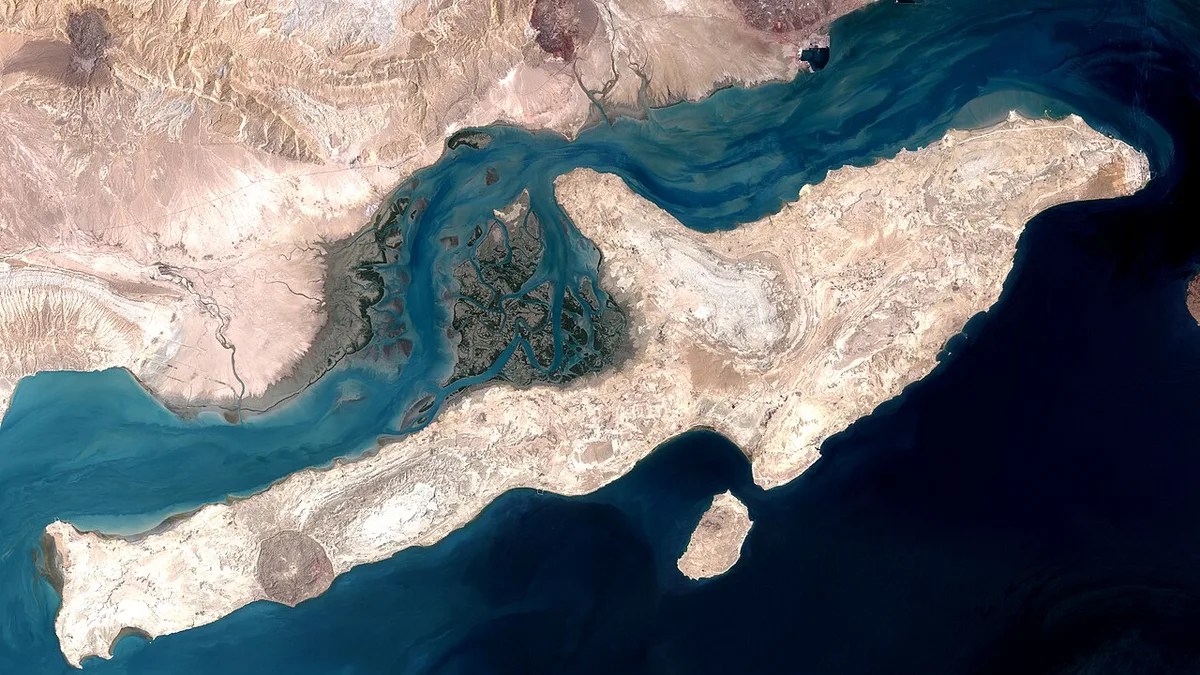
On Monday evening, November 2, American military forces launched airstrikes against targets on Qeshm Island, Iranian territory situated in the strategically vital Strait of Hormuz.
Two American officials confirmed the operation to ABC News, while additional officials provided details to CNN, CBS News, and The Washington Post. Iranian state media reported explosions on Qeshm Island, with additional reports of explosions around nearby Hengam Island and the mainland city of Bandar Abbas.
According to American officials, the strikes were conducted in response to Iranian forces firing at a U.S. aircraft. The administration characterized the operation as defensive, targeting Iranian military capabilities which threatened American personnel and assets in the region.
But the real story here isn’t in the official military script…it’s about power, not just missiles. Who gets to decide when the world tilts toward war, and who gets to find out after the fact?
Trump said there wouldn’t be new strikes against Iran before the midterms. Yet here we are…election eve, and American aircraft are lighting up Iranian territory anyway.
And here’s the twist…Monday’s operation wasn’t even a one-off.
The Washington Post reported that American forces have conducted additional strikes against Iranian targets in recent weeks without publicly announcing them. According to officials, those operations were intended to limit Iran’s ability to attack ships moving through the Persian Gulf and the Strait of Hormuz.
ABC News likewise reported that previous limited strikes had not been publicized because officials wanted to avoid denoting a broader return to major combat operations.
Let’s stop and actually consider what that means…not just for the headlines, but for the machinery running underneath.
The administration has been out here selling diplomacy while quietly running military operations against Iranian targets…some of which they didn’t even bother to mention to the public when they happened.
This is the same crew asking voters to trust their leadership…during an election that could hand Congress the keys to the vault and a flashlight to see what they’ve been up to.
The Strait of Hormuz is one of the world’s most important maritime energy corridors. Military operations there carry consequences for commercial shipping, global oil prices, transportation costs, and the already fragile economic conditions affecting households around the world.
Qeshm Island isn’t some random sandbar with a palm tree and a volleyball left over from a Tom Hanks movie. It’s a strategic nerve center…right next to Iranian naval bases, military hardware, and one of the main shipping arteries out of the Persian Gulf.
Any escalation here could ripple way beyond the immediate military fireworks.
And here’s the cosmic joke…Trump is walking into an election already haunted by public anger over the economic fallout from the Iran war, and yet American forces hit Iranian territory just hours before voters line up at the polls. The universe has a sense of timing that borders on malicious.
The American public is supposed to judge the administration’s record while finding out…surprise…that the military’s been busier than anyone admitted.
That deserves a lot more attention than another presidential fantasy about winning in a landslide.
NETANYAHU WANTS MORE STRIKES AFTER THE ELECTION, AND THE TIMING IS EXTRAORDINARY
The situation gets even more combustible when you look at what Benjamin Netanyahu is reportedly demanding.
According to reporting from Axios and the Associated Press, Netanyahu has been pressuring Trump to authorize another wave of attacks against Iran immediately after the American midterm elections.
The two leaders reportedly discussed the issue during a telephone conversation over the weekend. Sources familiar with the exchange described Netanyahu as favoring a rapid return to military action, while Trump preferred to allow negotiations additional time.
Associated Press reporting indicates Netanyahu has also been working with senior American figures to encourage a larger military campaign.
There’s another piece of this story that deserves a closer look.
Netanyahu and his far-right allies lost their parliamentary majority in Israel’s recent elections, leaving the Israeli political scene fractured and his governing position vulnerable.
A renewed full-scale confrontation with Iran could create the conditions for an emergency government…and suddenly, the political math around Netanyahu’s struggle to stay in power changes.
Now place that beside the American election. Trump is staring down the possibility that Republicans could lose the House, the Senate, or both. Netanyahu is facing his own parliamentary crisis. The two leaders are discussing a military confrontation that could rewrite the political conditions in both countries overnight. The timing creates a collision between domestic political vulnerability and international military decision-making…and nobody seems especially interested in hitting the brakes.
A larger campaign against Iran could hand Netanyahu a justification for demanding extraordinary political unity during a national security emergency. For Trump, another escalation might just deepen economic pain and spark even more conflict with Congress…especially if Democrats get the keys to the investigative kingdom tonight.
Netanyahu may see military escalation as a win for his own survival. Trump faces the question of whether expanding the conflict would shore up his position or just pour gasoline on an administration already smoldering with voter dissatisfaction.
And lurking under all those calculations is the possibility of an entirely different outcome.
Qatari mediators have been conducting indirect negotiations between Washington and Tehran, attempting to develop an agreement that would restore shipping through the Strait of Hormuz and ease the American blockade of Iranian ports.
Vice President JD Vance showed optimism Monday about the possibility of reaching a negotiated settlement. Iranian officials, meanwhile, have insisted that American restrictions must be lifted before substantial progress can occur.
Trump is staring down two competing pressures…a diplomatic process that could reduce hostilities, and Netanyahu’s demands for a fresh round of military fireworks.
The president who keeps calling himself a peacemaker is now presiding over secret military strikes while weighing proposals that could either dial down or blow up a war.
And the American electorate is voting right in the middle of it all…as if any of this is normal.
THE SUPREME COURT JUST HANDED TRUMP ANOTHER ELECTION DEFEAT
As American forces were conducting military operations abroad, the administration suffered a major legal setback at home.
On Monday, November 2, the Supreme Court rejected the Trump administration’s emergency attempt to force California election officials to separate mail ballots associated with approximately 20,000 individuals the federal government alleged might be noncitizens.
The justices issued a brief, unsigned order rejecting the Justice Department’s request. No dissent was publicly noted.
The administration had sought emergency judicial intervention after a federal appeals court declined to require California officials to segregate the ballots.
The legal dispute arose from the federal government’s compilation of a list of individuals it alleged were potentially ineligible to vote. California officials and voting-rights advocates challenged the reliability of the administration’s claims and methods.
An analysis conducted by researchers working with an immigrant-rights organization reportedly found that thousands of individuals appearing on the federal list were not even present on California’s voter rolls. The researchers also identified records potentially matching American citizens.
That raises some pretty serious questions about whether the feds actually know what they’re doing when they try to crash the state election party at the last minute.
The Supreme Court declined to give the administration the emergency relief it wanted.
This matters because the feds tried to yank California’s ballot procedures right before an election…and the Supreme Court just shrugged, sipped their coffee, and let California keep doing its thing while the legal fight drags on.
It’s another episode in the never-ending collision between the administration’s galaxy-brained view of executive authority and the stubborn institutions that occasionally remember they’re supposed to say no.
For months, Trump’s political machine has been on a tear…pushing aggressive moves on voter eligibility, election administration, and trying to get its hands on state election records.
The administration keeps insisting all this is about protecting election integrity. Meanwhile, critics are busy poking holes in both the so-called evidence and the idea that the feds even have the right to butt in.
Now, with the midterms breathing down our necks, the Supreme Court just shrugged off the administration’s request for a last-minute intervention.
There’s something almost poetic about an administration obsessed with controlling every lever of government…only to find out the machine still has working brakes.
Especially when those brakes are being pumped by judges who aren’t in the mood to play chauffeur.
THE JUSTICE DEPARTMENT IS DEPLOYING MONITORS NATIONWIDE
The administration is also rolling out an election-monitoring operation so sprawling it could probably use its own zip code.
The Justice Department announced plans to deploy approximately 1,000 election monitors and observers across all 50 states, describing the effort as the largest such deployment in department history.
California is among the states receiving federal monitors, including deployments in Los Angeles, San Diego, Sacramento, and Alameda County.
California Attorney General Rob Bonta responded by indicating that state authorities would have their own observers watching the federal monitors.
It’s a truly American spectacle…federal authorities watching state election officials, while state officials get ready to watch the federal watchers. Somewhere, there’s probably a PowerPoint explaining who’s supposed to be observing whom.
And you just know some bureaucrat is already drafting a grant proposal for a third layer of observers to supervise the observation of the observers.
Federal election monitoring isn’t new…it’s supposed to keep voting rights intact. But this year’s deployment is so over-the-top…and paired with the administration’s legal shenanigans in state election procedures…it’s no wonder the political friction is off the charts.
The same administration that tried to force California to separate thousands of ballots is now parachuting federal personnel into election jurisdictions all over the country.
And the same state officials responsible for administering those elections are asserting their authority. This is shaping up to be one of the defining institutional cage matches of Election Day.
The question isn’t just who wins anymore…the administration’s antics have turned the limits of federal election authority into a main event all by itself.
MORE THAN 59 MILLION AMERICANS HAVE ALREADY VOTED
Against this circus of legal drama and institutional turf wars, Americans are showing up in record numbers.
By Tuesday morning, the University of Florida Election Lab’s tracker had recorded more than 59 million early ballots. This is a preliminary participation snapshot, not a count of votes for any candidate.
Michigan reported that 32.9% of its active registered voters had cast ballots by 7 AM this morning. Minnesota recorded more than 886,000 early votes, establishing a state midterm record.
All 435 House seats are on the ballot today, along with 35 Senate seats and gubernatorial elections in 36 states.
These elections will decide just how much congressional muscle the Republicans get to flex for the rest of Trump’s term.
Republicans currently control the Senate with 53 seats, while the Democratic caucus holds 47, including two independents. Democrats face a difficult but potentially consequential path to regaining control.
The Senate battlegrounds include Maine, Michigan, Georgia, North Carolina, Ohio, Texas, Iowa, Kansas, Alaska, South Carolina, and New Hampshire.
In Maine, Republican Senator Susan Collins faces Democrat Troy Jackson. Georgia Democrat Jon Ossoff is defending his seat, while Texas voters are choosing between Democrat James Talarico and Republican Ken Paxton.
Michigan’s open Senate race is a powder keg, and the chaos there is a perfect snapshot of how unpredictable these final days have gotten.
HALEY STEVENS MAY HAVE HANDED ABDUL EL-SAYED THE BEST FUNDRAISING DAY OF HIS CAMPAIGN
Michigan Democratic Representative Haley Stevens created a political earthquake when she withdrew her endorsement of Democratic Senate nominee Abdul El-Sayed and publicly backed Republican Mike Rogers.
Stevens had competed against El-Sayed in the Democratic primary. After initially supporting the party’s nominee, she announced that she no longer considered him fit to serve in the Senate.
Her decision followed disagreements involving the Democratic nominee’s campaign, criticism of American assistance to Israel, and the relationship between Stevens and El-Sayed’s political allies.
Republicans immediately celebrated.
Trump praised the development, and Rogers incorporated Stevens’ endorsement into his campaign’s closing message, presenting her decision as evidence that even some Democrats believed he was the stronger candidate.
But the backlash was immediate.
El-Sayed’s campaign reported raising approximately $2.4 million on Sunday, the same day Stevens announced her endorsement of Rogers. ABC News reported that more than 29,600 of those donors were donating to the campaign for the first time.
Democratic Representative Debbie Dingell argued that Stevens’ decision was energizing communities behind El-Sayed.
The political chess move backfired so hard it practically set off fireworks.
Stevens gave Rogers a headline-grabbing endorsement, but El-Sayed received an enormous influx of money, attention, and new donors during the final hours of the campaign.
And while Rogers stressed the support of Democrats who had crossed party lines, El-Sayed concentrated his closing message on the economic difficulties facing Michigan families.
He spoke about the cost of gasoline, groceries, and the frustration of watching tax dollars spent on military operations abroad while ordinary Americans struggle to afford necessities at home.
That message connects directly to the larger national election.
While Trump is defending his administration’s record and American forces are striking Iranian territory, El-Sayed is asking Michigan voters why their money is being spent on war rather than their communities.
Stevens might have meant to kneecap his campaign…instead, she handed him the spotlight for the closing argument.
There’s something beautifully chaotic about political elites trying to engineer a candidate’s downfall and accidentally bankrolling his last big ad blitz.
Michigan voters now get to decide whether Stevens’ endorsement of Rogers or the backlash supporting El-Sayed carries greater electoral weight.
ELECTION EQUIPMENT FAILURES AND SEVERE WEATHER ARE COMPLICATING VOTING
Election officials are also confronting major logistical problems in several states.
In Westchester County, New York, ballot scanners malfunctioned at polling locations. State election officials attributed the failures to a programming update made after equipment testing. The county withdrew its initial explanation blaming ballot-paper thickness.
Voters were instructed to continue casting paper ballots, which could be secured for later tabulation under emergency procedures.
The disruption is especially important because portions of Westchester County belong to New York’s competitive 17th Congressional District, where Republican Mike Lawler faces Democrat Cait Conley.
Both campaigns urged voters to remain at polling locations despite the equipment failures.
In Georgia, Fulton County officials identified 1,069 early ballots for possible rescanning after two advance-voting scanners failed. The proposal requires approval at the county election board’s 6:30 PM Eastern meeting today, or 3:30 PM Pacific. If approved, the county says rescanning will take place in public view. A proposal is not a completed rescan, and neither supplies a candidate’s vote total.
Georgia Secretary of State Brad Raffensperger reported substantial statewide participation and said he did not expect the technical problems to create major delays.
Meanwhile, extreme weather has disrupted voting arrangements in Florida.
Heavy rainfall and flooding forced election officials to relocate polling locations and establish emergency accommodations for voters unable to reach their normal sites.
Parts of Florida experienced extraordinary rainfall in the period leading into Election Day, leaving roads submerged and transportation routes difficult to navigate.
All of this just piles more chaos onto an election system already buckling under the weight of political scrutiny. Across the country, election workers are juggling busted machines, wild weather, and a level of public scrutiny that would make a reality TV producer blush…all while trying to keep voting accessible and ballots secure.
SCHUMER THINKS DEMOCRATS CAN WIN THE SENATE, AND TRUMP KNOWS WHAT THAT WOULD MEAN
Senate Democratic leader Chuck Schumer voted in Brooklyn this morning and described himself as cautiously confident about Democrats’ prospects of retaking the Senate.
The stakes for the administration are enormous.
If Democrats capture the House, they gain the power to lead congressional committees, initiate investigations, request executive-branch records, and summon administration officials to testify.
Federal spending, immigration enforcement, military decision-making, and the administration’s use of executive authority could all become subjects of intensified congressional scrutiny.
A Democratic Senate would create even greater complications.
If Republicans lose the House, say goodbye to their grip on its committees. If they lose the Senate, the administration also faces an opposition majority with the power to reject presidential nominees. Suddenly, the administration has to deal with actual resistance over appointments, legislation, and military policy.
For a president who treats executive power like an all-you-can-eat buffet, real congressional resistance could turn the whole political ecosystem upside down.
Trump has spent the final days of the campaign urging Republicans to turn out and predicting that his party can preserve its congressional majorities.
But the president has also acknowledged the historical tendency for the party controlling the White House to lose ground during midterm elections.
And this time around, the fallout from that pattern could be especially brutal.
A Democratic win won’t evict Trump from the White House…but it would force an administration used to friendly fire from Congress to face a legislature with both the teeth and the appetite to dig into its business.
That possibility gets a lot more interesting when you remember what went down Monday night. American bombs hit Iranian soil while the president was busy prepping for an election that could decide whether Congress finally grows a spine about his foreign-policy stunts.
The political stakes here are cosmic…and not in the fun, Jupiter♃-throws-a-party kind of way.
THE BIGGER PICTURE: WAR ABROAD, INSTITUTIONAL RESISTANCE AT HOME, AND AN ELECTORATE DEMANDING ANSWERS
What makes this Election Day a true three-ring circus is just how many political showdowns are colliding at once.
Trump’s staring down the barrel of losing Congress. Netanyahu’s juggling political chaos in Israel and apparently itching for another round of military fireworks. Meanwhile, American forces have been busy with secret strikes on Iran, and the world’s diplomats are scrambling to keep the whole thing from blowing up even bigger.
Back home, the Supreme Court just told the administration to take a hike on their emergency election stunt, while state officials are still fighting to keep control over their own ballots.
And millions of voters are lining up to decide just how much pushback the administration gets from the machinery of government for the next two years.
Every single one of these dramas is about who gets to wield power…and who finally gets told no.
The administration can drop bombs, but it can’t bomb away the political blowback. It can beg the courts to meddle in state elections, but judges don’t have to play along. It can send in federal monitors, but state officials still hold the keys to their own elections.
And sure, it can campaign itself hoarse for Republican candidates…but in the end, it’s the voters who decide who gets to keep their seat at the table.
That’s the soft underbelly of the whole power machine.
Political authority isn’t a family heirloom…you have to keep earning it through institutions, elections, alliances, and the unpredictable beast known as public consent.
An administration might think it runs the show, only to find out that judges, lawmakers, state officials, and voters all have their own cards to play.
The emerging collision between these institutions is what makes tonight so consequential.
Maybe Trump keeps his congressional cheerleaders. Maybe Democrats snag the House while Republicans cling to the Senate. Or maybe the whole balance of power in Washington gets flipped like a cosmic coin.
Every scenario comes with its own fallout for the Iran standoff, congressional snooping, election rules, and whatever’s left of the administration’s domestic wish list.
But no matter how the votes shake out, November 3 has already ripped the lid off the pressure cooker that is American politics right now. The administration’s been running secret military ops. A foreign ally is apparently lobbying for another war. The Supreme Court just slammed the door on a ballot intervention. And voters are showing up in droves.
And all of this chaos is unfolding before we even get the first real election-night numbers.
THE RECKONING STARTS THE SECOND THE POLLS CLOSE
A major wave of polls closes at 7 PM Eastern, or 4 PM Pacific, including in Georgia, Virginia, South Carolina, and Vermont. Some polls in Kentucky and Indiana close earlier.
As the evening advances, attention will turn toward the competitive Senate races in North Carolina, Ohio, Michigan, Texas, and other battleground states.
The House map will begin revealing whether Republicans can hold their majority or whether Democrats are about to gain the power to investigate the administration.
Michigan’s Senate contest will test whether Haley Stevens’ extraordinary endorsement of Mike Rogers helped the Republican or energized enough support for Abdul El-Sayed to produce a Democratic victory.
Georgia’s results will help determine whether Democrats can defend one of their crucial Senate seats, while Maine and other Republican-held states could reveal whether the opposition has enough momentum to gain ground. And beyond the numbers, Trump’s reaction carries its own political significance.
The president keeps saying he’ll only accept the results if he thinks the process was honest…so if we get tight races, slow counts, or legal brawls, buckle up for another round of legitimacy drama.
And outside the Beltway, the question of whether we’re about to see another military flare-up with Iran is still hanging in the air.
That might be the most explosive part of today’s political landscape.
The American public is voting on who gets to hold the congressional reins while the executive branch is juggling an international crisis that could get a lot uglier, fast.
Netanyahu’s apparently pushing for more strikes once the midterms are over. American and Iranian negotiators are trying to hammer out a deal. And the military’s still running operations the public didn’t even know about.
The next Congress could walk into a whole new international mess…and tonight’s vote decides how much muscle it’ll have to push back on the administration.
The country’s standing right at the crossroads of electoral payback, institutional pushback, and global conflict.
After all the political chess moves, courtroom slugfests, campaign noise, and military saber-rattling, the biggest decision now belongs to the folks waiting in line at polling places across the country.
No matter how hard the powerful try to rig the game, they still have to face an electorate that can flip the whole congressional chessboard in a single night.
That’s the gorgeous, terrifying magic of democracy for anyone who’s gotten too cozy in the big chair.
The public doesn’t need a permission slip to change who’s in charge.
And on this Election Day, with American bombs dropping on Iranian soil just hours before the polls opened, that power feels more real, and more dangerous, than ever.
The polls aren’t even closed yet.
The courts are already pushing back.
The war has already landed on another Iranian island.
And the voters are still showing up.
Washington’s spent two years trying to hoard power…but tonight, America gets to decide how much of it actually makes it to sunrise.
With love, rage, and a healthy respect for the universal art of consequences,
Grey Galaxie
Your Resident Chaos Witch & Astrological Alchemist
Keep the Chaos Desk Independent
The votes cast today aren’t just about who runs Congress…they’ll shape the investigations, legal slugfests, political brawls, and international gambles coming down the pipeline for the next two years.
Cosmic Chaos is here to connect the dots that mainstream political coverage pretends don’t exist…digging into the machinery of power, the forces rattling its gears, and the collective movements rewriting our political future.
Independent reporting survives because readers decide it matters. Your support keeps this space wild, curious, and loyal to the community, not the institutions we’re poking at.
Become a paid subscriber to Cosmic Chaos
And Election Day is far from finished. Bring the developments you’re watching, the questions you’re asking, and the news happening across your corner of the country to our community discussion.
Join the Chaos Desk community chat
The establishment has its war rooms. We have the coven.
Sources
CNN, November 3, 12:59 AM Pacific: Qeshm strikes and diplomacy
Associated Press, November 3: strikes, Netanyahu’s request and negotiations
The Washington Post, November 2: previously undisclosed limited strikes
California attorney general, November 2: Supreme Court ballot decision
Associated Press, November 3: California ballot litigation
Justice Department, November 3: monitoring announcement and jurisdictions
University of Florida Election Lab: early-vote tracker, updated November 3
Early-vote snapshot, November 3, 8:21 AM Eastern: 59,014,258 ballots
CBS Detroit, November 3: Michigan’s morning participation snapshot
Minnesota Reformer, November 3: early-ballot total
ABC News, November 2: Stevens endorsement and El-Sayed fundraising
Associated Press: Maine’s Senate contest
Axios, November 3: revised Westchester programming explanation
Fulton County, November 3: proposed rescan and required board approval
WSVN, November 3: Florida flooding and polling-place relocation


